Hunter's Haven
- 4.2
- Rating
- 10.00K
- Installs
- Free
- Price

 Analysis by App-foxy
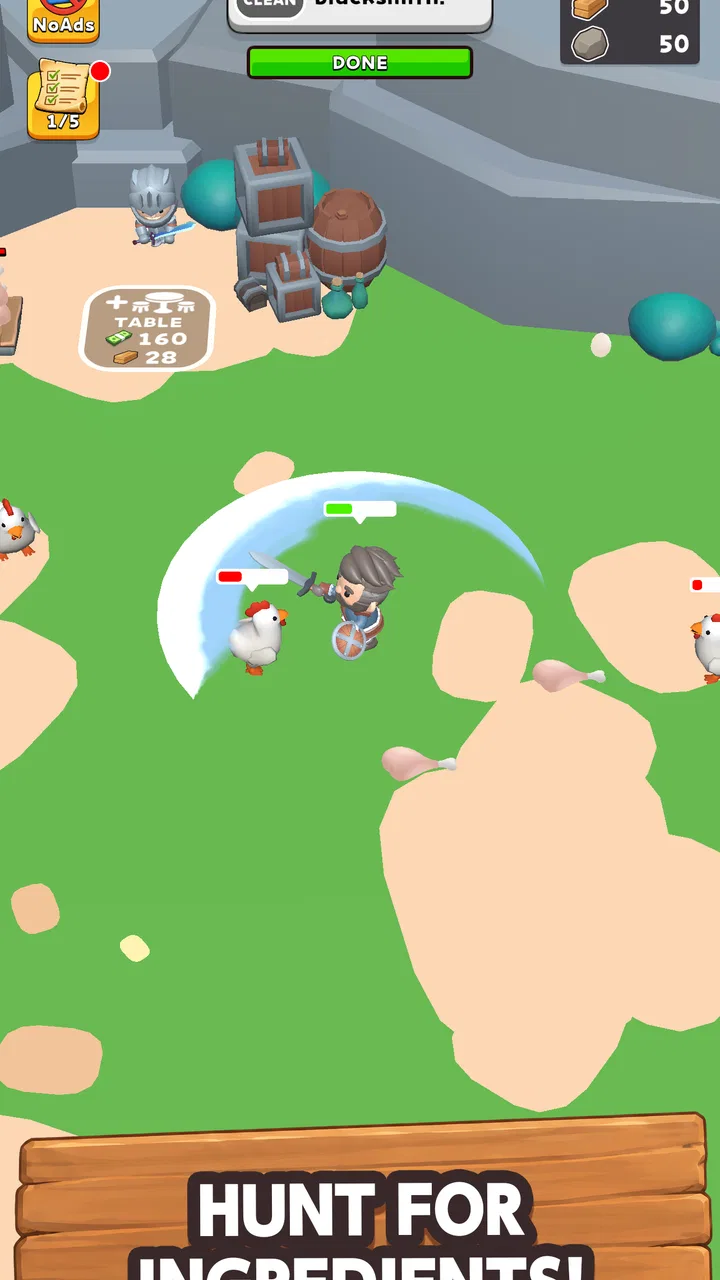
I went into Hunter's Haven expecting a small adventure game built around quick decisions, and that is largely how it feels in practice. Developed by Gamincat, this free Android game puts the emphasis on hunting monsters, collecting uncommon materials, and trying to stay alive for as long as possible. It is not presented as a sprawling role-playing epic. Its appeal comes from the repeated tension of entering a run, making progress, taking risks, and deciding whether the next reward is worth putting the current attempt in danger.
That basic structure makes it easy to understand within a few minutes, but it also creates the main question I kept asking myself: does each new attempt feel meaningfully different, or am I simply repeating the same short routine? My answer is mixed but positive. The game has a clear, approachable loop, and the free entry point makes it easy to try. At the same time, players who need a deep story, a large world, or highly varied combat may find the experience narrower than expected.
How the first hunt sets the tone
The first useful thing to understand is that the game is built around action rather than long explanations. You go out, look for monsters and materials, respond to danger, and try to turn a risky outing into a worthwhile one. That gives the opening a practical rhythm: instead of waiting for a complicated setup, you begin learning by doing.
You May Also Like

 Pandora - Music & Podcasts
Pandora’s Music Is Easy to Start, but Harder to Recover
Pandora’s strength is its low-effort path from a seed to a station. Its weak spot is how much confidence it asks you to place in connection, setup, and quiet recovery.

 AccuWeather: Weather Radar
AccuWeather Review: A Quick, Clear Forecast for Everyday Decisions
For everyday plans, the best forecast is the one you can understand quickly. AccuWeather makes rain timing, radar, and local conditions easy to act on, with a few trade-offs.

 Hill Climb Racing
Why Hill Climb Racing Still Turns Crashes Into One More Run
A tiny car, a bumpy hill and one more upgrade: Hill Climb Racing keeps resurfacing because its simple chaos makes every near-miss feel personal.

 AliExpress - Shopping App
AliExpress Makes Global Shopping Feel Personal, but Shoppers Bear the Risk
AliExpress turns a global marketplace into a pocket-sized discovery engine. Its reach is useful, its shopping loop compelling, and its trade-offs easy to miss.

 Lords Mobile: Kingdom Wars
Lords Mobile Is a Kingdom-Building Routine, Not a Quick Match
A case-by-case verdict on the building, battles, device demands, and social commitments that make Lords Mobile rewarding for some players and exhausting for others.

 PDF Scanner app - TapScanner
TapScanner Makes Paperwork Easier to Capture, Check, and Share
TapScanner makes scanning with a phone feel less like a rescue operation and more like a dependable step in getting work done. Its capture tools are useful, though not flawless.
More From Our News Desk
View All News


I like this approach for mobile play because it respects short sessions. A player can open the game with a simple goal in mind—find something valuable, survive a little longer, or test a better approach—and immediately have a reason to move. The hunt is not just a backdrop for menus. It is the part that gives the rest of the game its purpose.
The first action also teaches an important habit: do not treat every encounter as an invitation to push forward without thinking. Survival is part of the objective, so a material is only useful if you can bring the overall result out of the run. That creates a small but meaningful trade-off between greed and caution. I found myself weighing whether another encounter might improve the haul or simply erase the progress I had already made.
That decision-making is where the adventure category fits best. This is not only about defeating whatever appears in front of you. It is about managing the pressure created by limited safety. The game asks you to consider the value of continuing, even when the next reward is close enough to tempt you.
Action feels better when the goal is specific
A useful way to approach each attempt is to choose one priority before starting. I might focus on gathering materials, learning how a particular threat behaves, or seeing how far I can go without taking unnecessary risks. Without a personal objective, the loop can feel like a sequence of similar encounters. With one, even a brief run has a clearer shape.
This is one of the less obvious strengths of the design. The store summary gives the broad idea of hunting and surviving, but the practical enjoyment comes from setting a small purpose for yourself. That makes the same basic activity easier to read. A failed run can still be useful if it taught me when to retreat or which kind of risk was not worth taking.
The game is also approachable for players who do not usually commit to long adventure sessions. Its Everyone age rating supports that broad accessibility, although younger players may still need guidance around optional purchases. The core download is free, while individual in-app items range from $4.99 to $7.49, so I would avoid treating the shop as part of the required starting routine. I would first learn whether the basic loop is enjoyable without spending anything.
The feedback rhythm: danger, reward, and another decision
The strongest part of Hunter's Haven is the feedback rhythm connecting one action to the next. You encounter danger, respond to it, receive a result, and then decide whether that result justifies continuing. When the rhythm works, the game produces a satisfying little chain of questions: What did I gain? How exposed am I now? Is the next target worth the risk?
That rhythm is more important here than spectacle. The pleasure does not depend on a huge narrative reveal after every hunt. It comes from seeing a run become more valuable while knowing that a poor decision can end the attempt. I enjoy games that make small gains feel earned, and this one understands that a rare material matters more when it is attached to a dangerous outing.
The feedback is also useful because it helps a new player improve without needing a formal strategy guide. If I rush through a situation and lose the run, the result encourages a slower approach next time. If I leave with a worthwhile haul, I have a concrete reason to repeat the process. The game’s learning curve is therefore tied to consequences rather than lengthy instruction.
Still, this kind of loop can become repetitive if the encounters do not keep presenting fresh decisions. Players who want a large variety of objectives should keep that limitation in mind. The experience is most convincing when I am actively choosing how much risk to accept; it is less compelling when I feel I am simply performing the same sequence because there is no alternative route to progress.
Why the survival pressure matters
Survival gives the rewards their weight. If every trip were guaranteed to end well, collecting materials would feel like routine housekeeping. The possibility of losing the value of a run changes how I play. I pay more attention to the condition of the attempt, the value of what I have already gathered, and whether a new fight adds enough to justify the danger.
This is also where the game may divide its audience. I find the pressure motivating in short bursts, especially when I have enough time for one more attempt but not enough time for a long campaign. Someone looking for a relaxed collecting game may find the threat of losing progress frustrating instead. The same system that creates excitement for one player can feel like unnecessary friction for another.
My practical advice is to treat early outings as experiments rather than important missions. Use them to learn the pace of danger and the value of different choices. Once the consequences become familiar, the game feels less arbitrary. I was more willing to take calculated risks after I stopped expecting every run to produce a perfect result.
Rewards that give the hunt a reason to continue
Materials are the clearest reward in the game, but their real function is motivational. A successful hunt gives me something to remember, a reason to attempt another run, and a way to measure whether a different approach worked better. The reward is not only the item itself; it is the sense that the next session can begin with a slightly better plan.
Rare materials are especially effective because they create a hierarchy of outcomes. A run can be safe but ordinary, or dangerous and more valuable. That distinction keeps the hunt from becoming a simple pass-or-fail activity. Even when I do not get the best possible result, I can judge the run by how efficiently I handled the danger and whether the reward matched the risk.
This makes the game suitable for players who enjoy gradual improvement without needing a heavy story. I can play for a short period, collect something useful, and stop with a clear sense of completion. It also works as a compact break during an everyday routine. For example, I could start a session while waiting for an appointment, decide to make one careful expedition, and close the game after securing a modest haul rather than feeling forced into a long commitment.
The trade-off is that rewards need context to stay exciting. If you are the kind of player who wants constant new equipment, elaborate character builds, or a large collection screen to manage, the appeal may wear thin. Hunter's Haven is better at creating tension around the act of obtaining materials than at delivering a huge catalog of systems around them.
How I would handle optional spending
Because the game is free to play and offers paid items, I would approach the purchase screen cautiously. The most sensible workflow is to play enough unpaid sessions to decide whether the central hunt is enjoyable on its own. Spending before understanding the loop can make the game feel more rewarding temporarily, but it does not solve a lack of interest in the underlying activity.
I also prefer to view paid items as a convenience or optional boost rather than an automatic requirement. The listed item range is noticeable for a small mobile game, so the purchase decision deserves more thought than an impulse tap. Families should be particularly careful with payment controls, even though the game itself carries an Everyone rating.
What happens when a session resets
The reset is not merely a punishment; it is what gives the next session its purpose. Once an attempt ends, I naturally start reviewing the choices that led there. Did I stay too long? Did I chase a material that was not worth the exposure? Did I misunderstand the danger, or did I simply take a deliberate gamble?
That short reflection is central to the game’s design. A reset works when it sends me back with a better idea, not just a feeling that time was wasted. Hunter's Haven generally benefits from this structure because the objective is survival over repeated outings, not perfection on the first try. The next run begins with knowledge, even if the previous haul was disappointing.
There is a subtle difference between a productive reset and a repetitive one. A productive reset changes the way I approach the next hunt. A repetitive reset happens when the same failure occurs without giving me a clear way to respond differently. For that reason, I recommend playing attentively rather than mechanically. If I stop noticing what caused the failure, the loop loses much of its value.
This is also why the game is not the best choice for everyone. Players who dislike losing progress, repeating attempts, or learning through failure may prefer a more forgiving adventure game. A traditional story-driven alternative is likely better if your main goal is to uncover characters and plot. A deeper survival game may suit you more if you want extensive crafting, construction, or world management. Hunter's Haven sits between those expectations: it offers a focused survival hunt rather than a broad simulation.
Who will get the most from repeated attempts
I think the best audience is someone who enjoys compact action loops and does not need every session to deliver a dramatic new chapter. The game rewards patience, risk assessment, and the willingness to adjust after a failed attempt. It is particularly easy to recommend to a friend who wants an adventure game that can be played in manageable bursts.
I would be more selective with players who need multiplayer interaction, a large narrative campaign, or a constant stream of new mechanics. The store rating of 4.2 from around 370 ratings suggests that the game has found a receptive audience, but that number should not be read as proof that its focused structure will suit every taste. The experience is specific: hunt, gather, survive, reset, and try again.
The current version is 0.12.1, and the game was released on June 9, 2025. It requires Android 9 or later, so compatibility is straightforward for many recent devices, while owners of older phones should check their operating system before planning to play. With over 10 thousand installs, it is still a relatively small title rather than an established giant in the mobile adventure space. That can be appealing if you prefer discovering compact games, but it also means you should approach it as a focused experience instead of expecting the breadth of a major franchise.
My verdict on the complete action-to-reset loop
After spending time with it, I see Hunter's Haven as a game built around one clear promise: every outing should make me decide how much danger I am willing to accept for a better reward. Its best moments come from that tension. I begin with a target, react to threats, collect something worthwhile, and then face the temptation to continue when stopping might be wiser.
The loop is easy to grasp but not completely mindless. The most satisfying sessions are the ones in which I make a deliberate choice, see the consequence, and carry that lesson into the next attempt. That gives the reset a purpose and turns a failed run into part of the learning process rather than a dead end.
My main reservation is variety. If the available encounters and rewards do not keep surprising you, the repeated structure can settle into a routine. I would not choose this over a story-heavy adventure for narrative depth, or over a larger survival game for extensive systems. I would choose it when I want a free, focused mobile hunt that can provide a meaningful burst of risk and reward without asking for a full evening.
Overall, I recommend giving it a fair trial before judging it. Play several unpaid sessions, set a different small goal each time, and pay attention to whether your decisions improve after a reset. If that action-feedback-reward cycle clicks with you, Hunter's Haven has enough tension to make another session feel justified. If you need constant novelty or dislike losing progress, it is better to skip it in favor of a more forgiving adventure.
For me, the final verdict is simple: this is a compact survival adventure for players who enjoy turning a risky run into a reason to try again. Gamincat keeps the idea accessible, and the free price makes experimentation easy. Its focused scope is both its strength and its limitation, so the right recommendation depends less on how much content you expect and more on whether you enjoy the decisions between entering the hunt and walking away with your reward.
FAQs for Hunter's Haven
01What is Hunter's Haven, and what can I do in the app?
Hunter's Haven is a hunting-focused mobile experience designed for players who enjoy exploring outdoor environments, tracking targets, completing hunting activities, and improving their equipment. Depending on the version available on your device, gameplay may include missions, progression systems, challenges, and resource management. Before downloading, check the store description and screenshots to confirm the supported features and game mode on your Android or iOS device.
02Is Hunter's Haven free to download and play?
Hunter's Haven may be available as a free download, but users should review the store listing carefully because free games often include optional in-app purchases, advertising, or premium items. Purchases can sometimes provide cosmetic content, upgrades, resources, or faster progression. If children will use the app, it is recommended to enable parental controls and require authentication before any transaction is completed.
03Does Hunter's Haven require an internet connection?
The connection requirements can vary depending on the features included in your version of Hunter's Haven. Basic gameplay may work offline, while advertisements, cloud saves, updates, leaderboards, events, or other online services may require an active internet connection. For the smoothest experience, install the latest version and check the official store information, especially if you plan to play while traveling without mobile data.
04Is Hunter's Haven suitable for children?
Parents should check the official age rating and content description before allowing a child to download Hunter's Haven. Because the game is based around hunting, it may include weapons, animal targets, realistic sounds, or action-oriented scenes that are not suitable for every age group. Also review advertising, chat or social features, data permissions, and in-app purchases, then use device-level parental controls when appropriate.
05What devices are compatible with Hunter's Haven, and how much storage is needed?
Compatibility depends on the specific Android or iOS release, operating-system version, and hardware requirements set by the developer. Before installing Hunter's Haven, confirm that your phone or tablet meets the minimum system version and has enough free storage for the initial download and future updates. A stable device with available memory is also recommended, since graphics-heavy gameplay may perform poorly on older hardware.
Pros
- Relaxing hunting gameplay with a strong focus on exploration.
- Wide selection of locations and wildlife to discover.
- Progression system keeps new gear and challenges coming.
- Immersive outdoor atmosphere with detailed natural environments.
- Suitable for short sessions or longer hunting trips.
Cons
- Some activities may feel repetitive after extended play.
- Advanced equipment can require considerable time to unlock.
- Certain areas or features may be limited behind progression.
- Realistic pacing may feel slow for action-focused players.
- Performance can vary on older phones and tablets.

Hunter's Haven
Gallery